Early Autism Care Center in Whitefield: 8 Early Signs to Act On
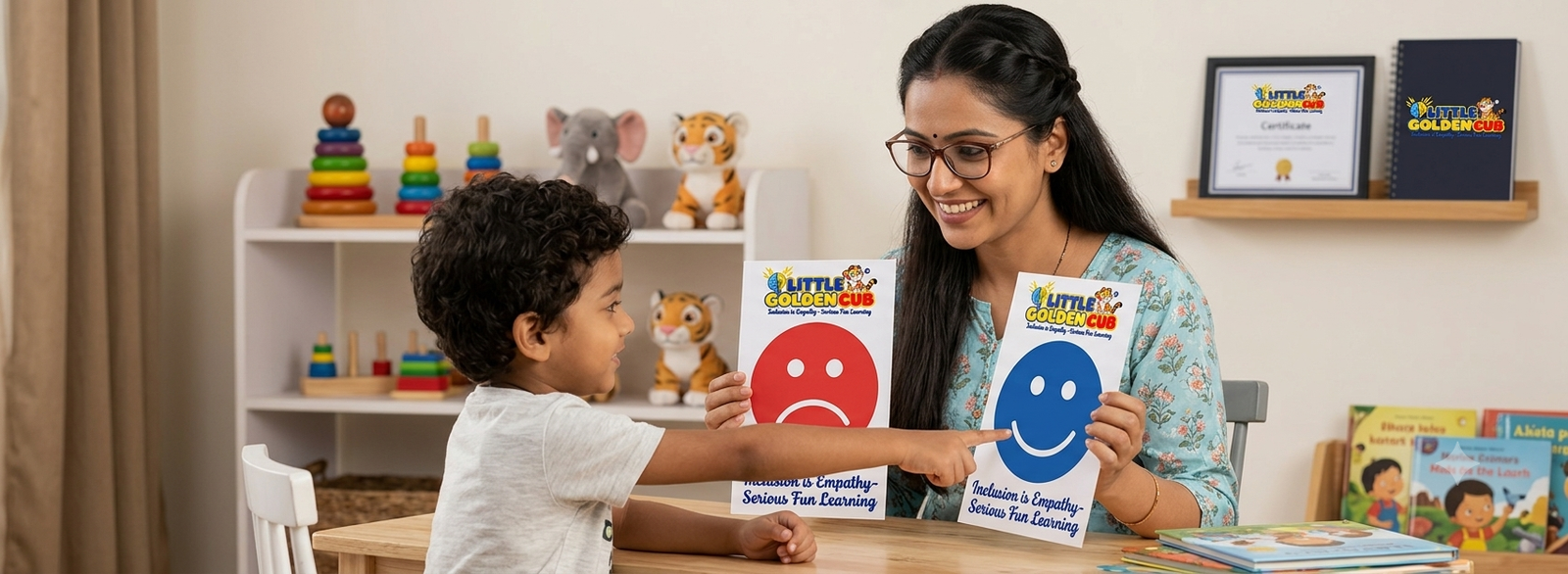
If you have noticed that your child rarely looks at you, does not turn when you call their name or is not speaking like other children their age, finding an early autism care center in Whitefield can feel urgent and overwhelming. This guide explains the early signs, why starting early matters, the therapies that help and how to choose the right place for your family.
The earlier a child gets understanding and support, the more time they have to build communication, play and daily living skills. The US Centers for Disease Control and Prevention lists signs and symptoms of autism that many parents use as a starting point for the conversation with their doctor.
What Is Early Autism Care?
Autism spectrum disorder (ASD) is a difference in how a person communicates, interacts with others and processes sensory information. Every autistic child is different, with their own strengths and their own challenges.
Early autism care means an assessment and a personal therapy plan in the early years, together with guidance for parents. A good early autism care center in Whitefield does not try to change who your child is. It builds the skills your child needs to communicate, learn, play and take part in family life with more confidence.
8 Early Signs of Autism to Watch For
These signs are not a diagnosis. Many children show one or two of them and develop typically. If you notice several, or they continue, book an assessment.
1. Limited eye contact
Your child rarely looks at your face during play, feeding or when you talk to them.
2. Not responding to their name
They do not turn or look when called, even when there is no other noise.
3. Delayed speech or loss of words
Few or no words for their age, or words that were used earlier have disappeared.
4. Few gestures
Pointing, waving, showing you toys and nodding are rare or missing.
5. Repetitive movements or play
Lining up toys, spinning objects, hand flapping, rocking or repeating the same action again and again.
6. Strong sensory reactions
Covering ears at ordinary sounds, refusing certain textures or foods, or constantly seeking spinning and jumping. Sensory integration therapy supports these needs.
7. Difficulty with change
Big distress when routines, routes or food change, or when it is time to stop an activity.
8. Little interest in other children or pretend play
Your child prefers to play alone and does not join in games, or does not use toys to pretend, such as feeding a doll.
Important: only a qualified doctor can diagnose autism. At Little Golden Cub we assess your child's development, start therapy where it can help and work alongside your paediatrician. You can call or WhatsApp us on +91 80763 22623 for a friendly, no-pressure first conversation.
Why Early Care Matters
A young child's brain and skills are developing quickly. Starting support early at an early autism care center in Whitefield means children can learn to communicate their needs, which often reduces frustration and tantrums. It also gives parents tools and confidence sooner.
- Communication grows sooner. Children learn gestures, words or alternative ways to communicate.
- Behaviour becomes easier to understand. Therapists look for the reason behind a behaviour, such as sensory overload or difficulty asking for help.
- Families feel supported. Parents learn what to do at home and stop feeling alone.
- School readiness is built early. Sitting tolerance, following instructions and social play are practised before school begins.
Progress looks different for every child, so no ethical centre can promise exact results. What we can promise is a clear plan, regular reviews and honest updates.
Therapies at an Early Autism Care Center in Whitefield
Our early autism care center in Whitefield brings several therapies under one roof, so they work together in one plan:
- Occupational therapy: play, self-care, motor skills and sensory regulation. Read about occupational therapy in Whitefield.
- Speech therapy: early communication, language understanding and clear speech.
- Sensory integration: helping children process and respond to sensory input with comfort and focus.
- ABA therapy: structured, play-based programmes that build positive behaviour and new skills.
- Psychology: emotional, behavioural and developmental support for children and families.
- Special education and school readiness: eye contact, sitting tolerance, name response and instruction following.
- Early intervention: timely support in the early years.
- Parent training and guidance: because parents are the most important part of a child's progress.
Our team also uses neuro-affirmative techniques, a respectful, strength-based approach that values how each child experiences the world.
How Our Approach Works
- Conversation: you tell us your concerns, your child's history and what matters most to your family.
- Assessment: the team observes play, communication, movement and sensory responses.
- Personal plan: we set goals and recommend which therapies and how often.
- Therapy and parent coaching: sessions run alongside guidance so learning continues at home.
- Regular reviews: we share progress and adjust the plan as your child grows.
What Parents Can Do at Home Today
Therapy works best when home life supports it. Your early autism care center in Whitefield team will give you a personal plan, and these simple steps are a good start:
- Get on the floor and play. Follow your child's lead and copy what they do.
- Respond to every attempt to communicate, even a look, a sound or a reach.
- Keep routines predictable. Use simple pictures to show what happens next.
- Reduce overwhelming noise and crowds when your child is stressed.
- Note what you see. Short videos of play and speech help the assessment team.
- Be kind to yourself. You are doing the right thing by asking early.
How to Choose an Early Autism Care Center in Whitefield
Ask these questions before you commit:
- Are the therapists qualified? Look for certifications such as RCI, AIOTA, AOTA and IAP.
- Is it multidisciplinary? Occupational, speech, behavioural and educational support should connect.
- Is there an assessment before a plan? Avoid fixed packages given without evaluating your child.
- Are parents included? Home programmes and regular updates are a good sign.
- Is the language respectful? The centre should talk about strengths, not only deficits, and avoid promises of a cure.
- Is it easy to reach? Consistency matters, so choose a centre close to Whitefield, ITPL, Marathahalli or Varthur.
Why Families Choose Little Golden Cub
Little Golden Cub Foundation is a multidisciplinary child development and rehabilitation centre that is DPIIT certified, a registered NGO and a government-registered training provider, with over 15 dedicated therapists. Families rate us 4.9 on average from 41 Google reviews. Read more about our team, or see our guide to a child development centre in Bangalore Whitefield.
"My son has been attending the preschool readiness programme and occupational therapy for 2 months, with significant improvements in eye contact, sitting tolerance, name response and instruction following."
A parent, Google review
We also offer 80G benefits on eligible services. Please contact the team to know what applies.
Visit Our Early Autism Care Center in Whitefield
Little Golden Cub, Whitefield
373, Second Floor, Above Tooth Affair, Opposite ITTINNA AKKALA Apartment, ITPL Main Rd, Rajpalya, Bengaluru, Karnataka 560048
Hours: Monday to Saturday, 8:30 AM to 7:30 PM
Phone and WhatsApp: +91 80763 22623
Other centres: Varthur / Gunjur and Sarjapur
Frequently Asked Questions
Can autism be identified early?
Signs of autism often appear in the first two to three years, such as limited eye contact, not responding to name and delayed speech. A developmental assessment can show whether your child needs support, and a qualified doctor makes any formal diagnosis.
At what age should I look for an early autism care center in Whitefield?
As soon as you notice a concern. There is no need to wait for a diagnosis. Early assessment and therapy can begin while your child's skills are developing fastest.
Is autism therapy a cure?
No. Autism is a lifelong difference in how a person communicates, interacts and processes the world. Therapy helps children build communication, daily living, learning and social skills, and supports families.
Which therapies does an early autism care center in Whitefield offer?
At Little Golden Cub these include occupational therapy, speech therapy, sensory integration, ABA therapy, special education, psychology, early intervention and parent training.
How do I book an assessment at Little Golden Cub in Whitefield?
Call or WhatsApp +91 80763 22623, or use the booking form on our website. Our team will confirm a time at the Whitefield centre.
Book an assessment at our early autism care center in Whitefield today.
Book an Assessment → WhatsApp Us